


What is Age-related Macular Degeneration (AMD)?
AMD is a leading cause of vision loss, affecting the central vision needed for reading, driving and recognising faces. There are two types of AMD known as ‘Dry’ and ‘Wet’. There is currently no treatment for ‘Dry’ AMD, although clinical trials are being undertaken to test novel therapies. ‘Wet’ is treated by injections to the eye and a trial is underway to try to lessen the impact of regular visits to clinics. Our growing team of scientists are working on discovering more causes of this devastating disease. Your gifts support the development of new treatments for patients in the future.
Dry Age-Related Macular Degeneration
Dry age-related macular degeneration (AMD) is the most common form of this disease. The cells of the macula decay and disintegrate. Clinical trials are currently being undertaken using drugs to slow progression of the disease and an AI trial is working on finding a way to identify those at risk of developing this devastating condition. Patients who have been diagnosed with ‘dry’ AMD can sometime progress to the ‘wet’ type and should be aware that this can happen as this is considered an emergency in order that treatment may be started at the earliest possible opportunity. If left too late scarring can occur which will reduce the chances of successful treatment.
Wet Age-Related Macular Degeneration
Wet macular degeneration is the most severe form of AMD. Vascular endothelial growth factor (VEGF) is a signal protein produced by cells that stimulates the formation of new blood vessels. These cause distortion of vision and, if left untreated, lead to scarring and permanent loss of sight. Treatment with anti-VEGF drugs can halt the growth of these blood vessels and prevent further damage. However, any delay in being diagnosed by an eye specialist can lead to permanent visual loss.
Symptoms of Wet AMD
Signs of Wet AMD include the following symptoms, which shouldn’t be ignored:
- Sudden blurring of central vision
- Distortion of vision e.g. the side of a door frame has a kink in it when it should be straight
- Being sensitive to bright lights
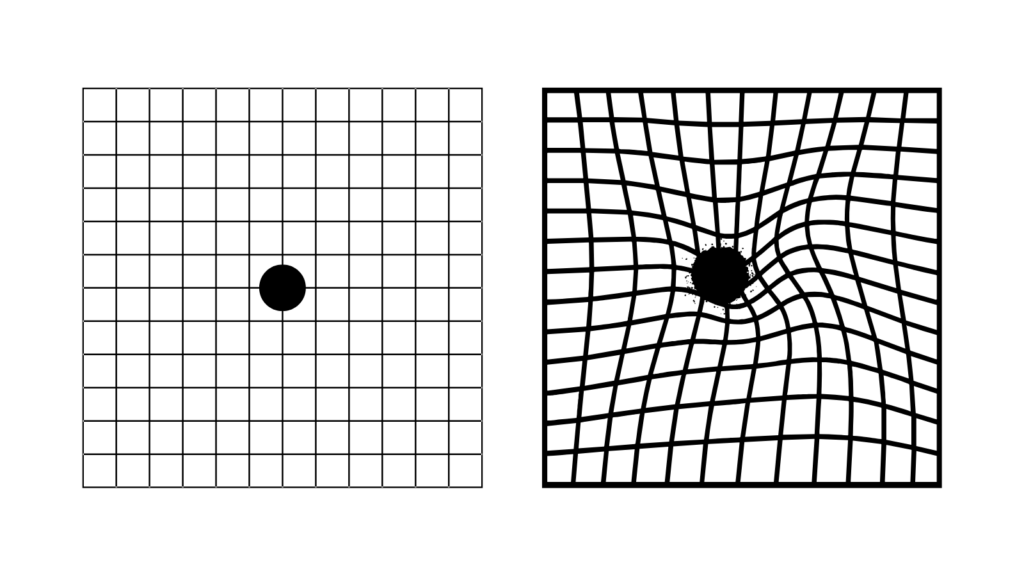
Checking for distortion
The Amsler Grid can help identify possible changes affecting central vision.
Cover one eye at a time and focus on the central dot. If the lines appear distorted, wavy or missing, seek advice from an optician as soon as possible. The grid on the left shows what you would see with normal vision, the grid on the right shows vision when AMD may be present.
What to do if you think you have wet AMD
If you think you have wet AMD you need urgent medical assessment and should contact your GP or optometrist, as an early diagnosis can save sight. Local eye clinics have casualty areas so please telephone them if you are unable to contact your GP.
Sometimes sight loss causes a phenomenon called Charles Bonnet Syndrome which can be mistaken for hallucinations.
What do we know about the causes of AMD?
We have a growing team of scientists identifying the causes of this disease, with pioneering research led by Professor Andrew Lotery. Clinical trials are also in progress to identify and improve treatment options.
Diet. Studies suggest that people who eat a diet rich in carotenoids (powerful antioxidants) have a lower risk of developing AMD. Our research team have also found evidence that an ‘unhealthy’ diet can be detrimental to vision.
Vitamins. There is no evidence to date that taking vitamins when there are no clinical signs of disease will prevent age-related macular degeneration. It is thought that they may help to slow the disease in some people with early – to mid-stage AMD.
Smoking is a major risk factor for both wet and dry macular degeneration. If at all possible patients should stop or reduce smoking.
Sunshine is lovely but please wear sunglasses to protect your eyes from damaging UV-A and UV-B rays.
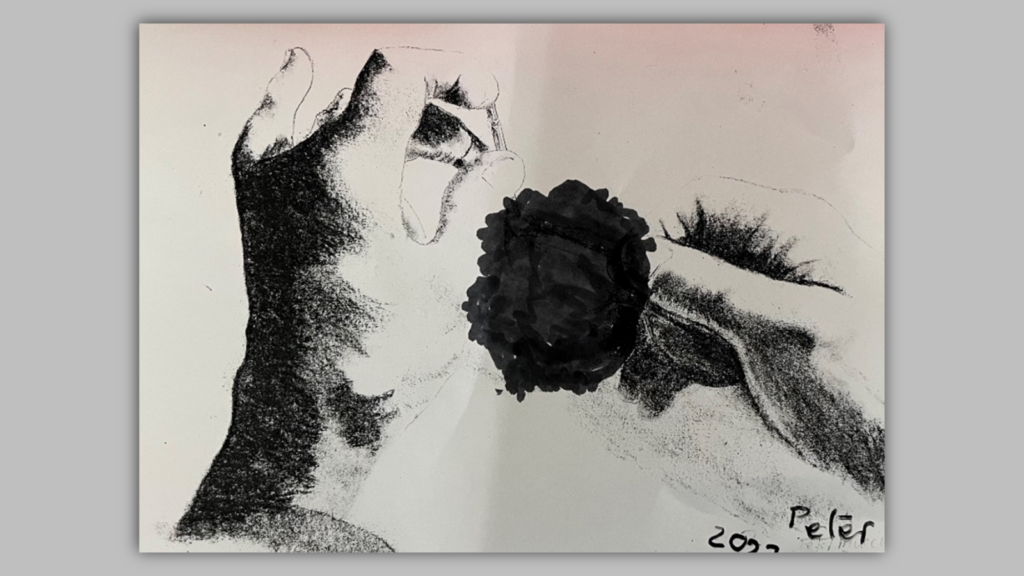
This image is drawn by a talented artist with AMD who was able to demonstrate how the condition affects his vision.
Impact of Diet on AMD
One of our PhD students has produced a animated video, featuring Professor Andrew Lotery highlighting the impact of diet on Age Related Macular Degeneration (AMD). Diet and nutrition is strongly linked with eye sight, where a healthy, balanced diet can protect people from diseases such as age-related macular degeneration, in the same way that unhealthy foods (typified by a fast food diet) can increase the chances of eye disease.
How you can help AMD eye research
You can support AMD eye research by donating to Gift of Sight and selecting ‘AMD and Retinal’ from the dropdown menu. We also welcome fundraising events and activities and would be delighted to support your efforts. Please contact Ailsa or Jennie at Gift of Sight for any enquiries.