
Eye Health
Good eye health is an important part of your overall wellbeing. Many eye conditions develop gradually and may not cause obvious symptoms in their early stages. Regular eye tests and healthy lifestyle choices can help protect your vision and identify any problems early.
Understanding how the eye works
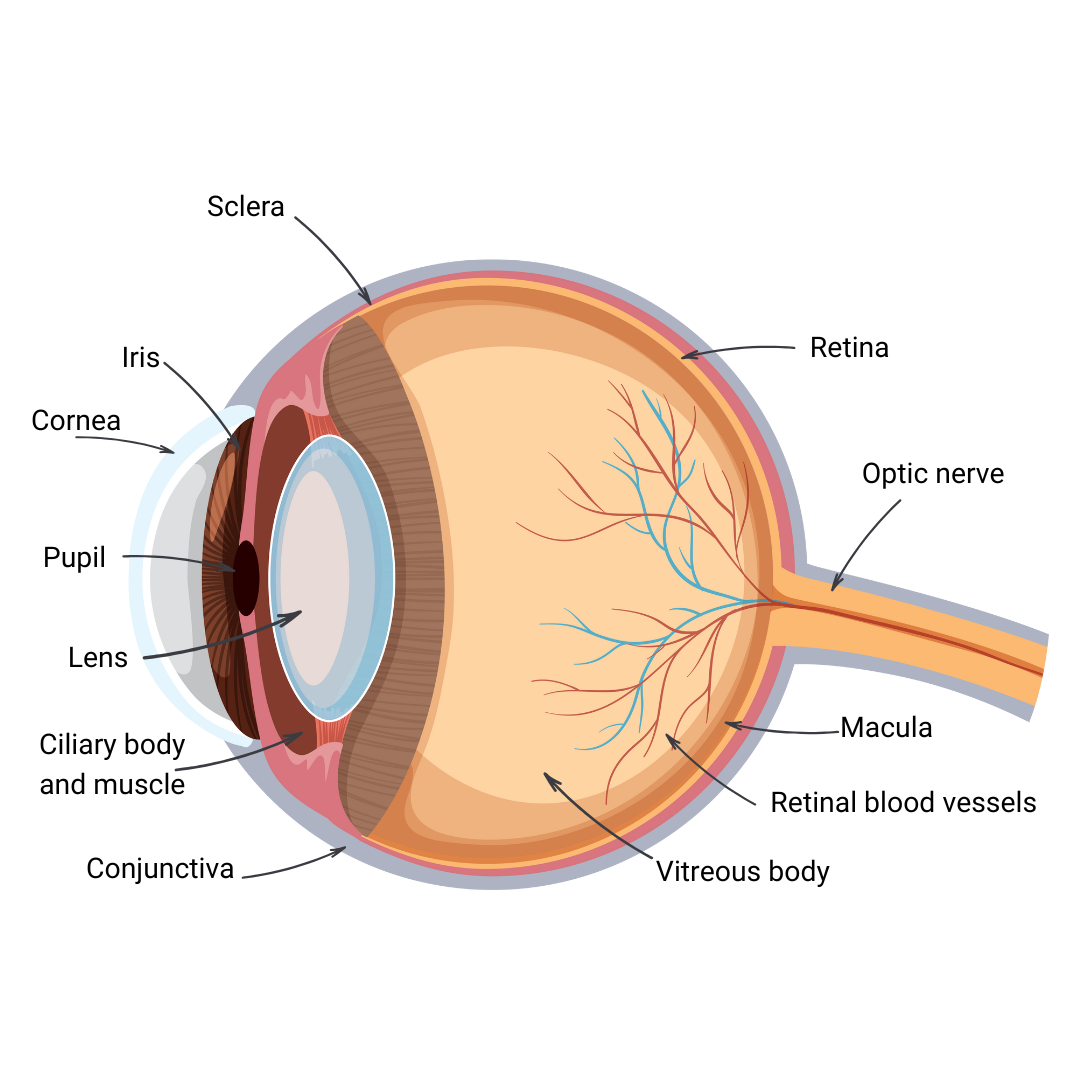 The cornea is a transparent structure found in the very front of the eye that helps to focus incoming light.
Situated behind the pupil is a colorless, transparent structure called the crystalline lens which focuses the light on the retina at the back of the eye.
The retina is the delicate innermost layer of tissue that lines the eye. It contains layers of light receiving cells called photoreceptors that are connected to the brain by the optic nerve.
The optic nerve carries visual information from the eye to the brain.
The macular is the small, central part of the retina responsible for detailed vision, reading, writing and recognising faces, as as well as giving us our ability to see colour.
Regular eye tests can save sight
Many eye conditions have no obvious symptoms in their early stages.
Regular eye examinations at any age can help detect problems before vision is permanently affected, even if your sight appears normal.
We recommend:
- Attending routine eye tests as advised by your optician
- Discussing any family history of eye disease
- Seeking advice promptly if you notice changes in vision
Knowing the warning signs
You should arrange an eye examination if you experience:
- Blurred vision
- Distorted vision
- Difficulty reading
- Changes in colour perception
- Increased sensitivity to light
- Sudden changes in vision
Checking for distortion
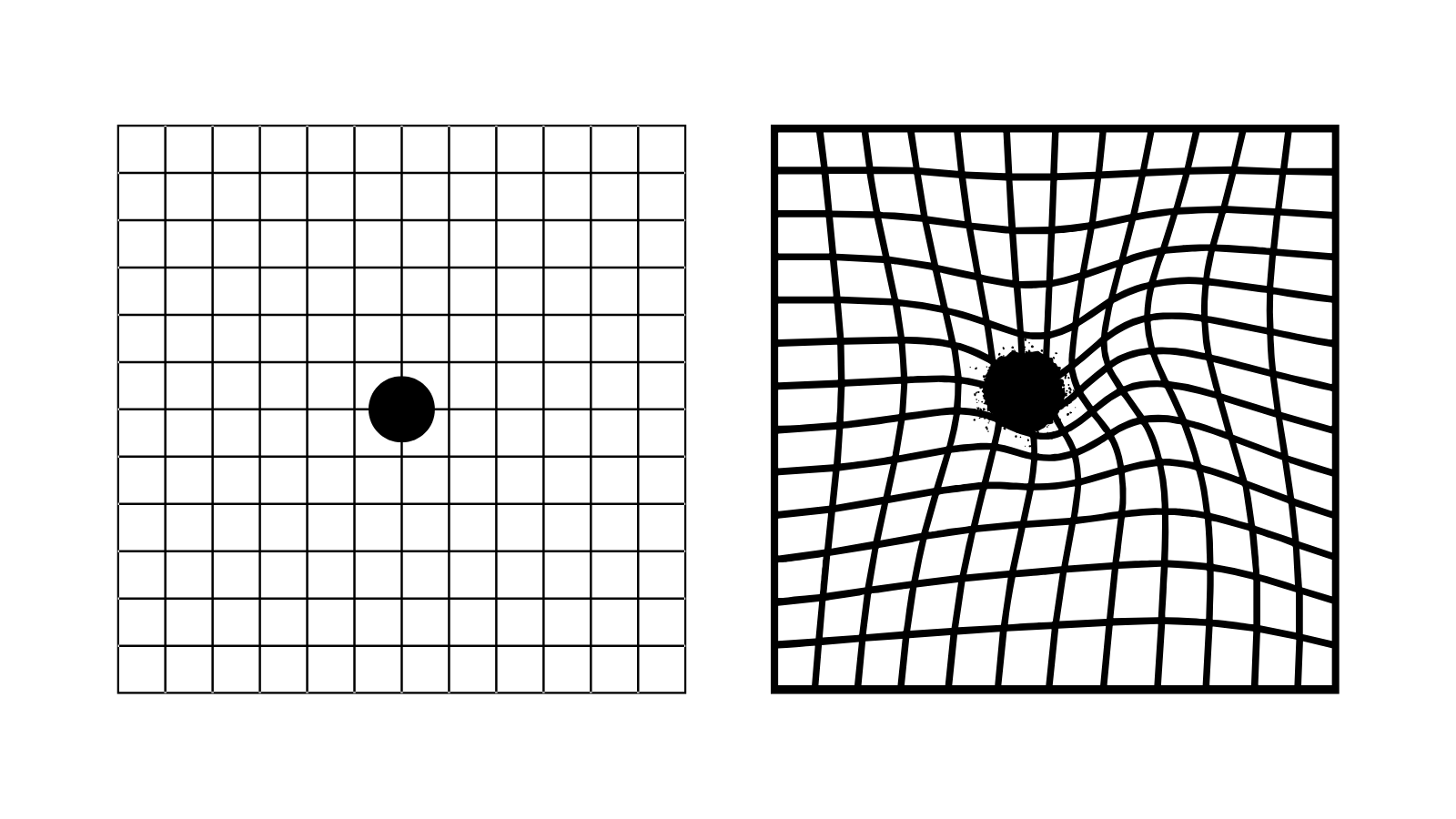
The Amsler Grid can help identify possible changes affecting central vision.
Cover one eye at a time and focus on the central dot. If the lines appear distorted, wavy or missing, seek advice from an optician as soon as possible. The grid on the left shows what you would see with normal vision, the grid on the right shows vision when AMD may be present.
Top tips for improving your eye health 
1. Eat a balanced diet
A healthy diet rich in antioxidants, minerals and vitamins can help reduce the risk of eye diseases such as age-related macular degeneration. Foods particularly beneficial for eye health include:
- Leafy green vegetables like kale, broccoli and spinach - high in important carotenoids
- Orange-coloured fruits and vegetables like carrots, sweet potatoes and apricots are good sources of vitamin A.
- Almonds, avocados and sunflower seeds are rich in vitamin E
- Eggs are another good source of carotenoids
- Fish such as salmon, sardines, tuna and trout are high in omega-3 fatty acids
- Foods containing Zinc, such as beans, lean red meat and poultry.
2. Have regular eye examinations.
Eye tests do much more than check whether you need glasses. They can identify early signs of conditions including glaucoma, macular degeneration and diabetic eye disease. The earlier eye diseases are identified, the more likely treatment may be possible.
3. Know your family history.
Some eye conditions can run in families. You may also be entitled to a free eye test in England, Wales and Northern Ireland. It is important to let your doctor or optician know about any family history of:
- Macular degeneration
- Glaucoma
- Retinal disease
- Strabismus (squint)
- Amblyopia (lazy eye)
4. Exercise regularly. Good physical fitness leads to healthy blood sugar levels, which prevents chronic health conditions like diabetes. Diabetes increases your risk for eye diseases, such as diabetic retinopathy, cataracts and glaucoma.
5. Don't smoke. Smoking is proven to be harmful to your eye health, as well as your heart and lungs. It is a major risk factor for age related macular degeneration. If you do smoke, please stop.
6. Protect your eyes.
Many people attend the Eye Casualty unit in Southampton because of accidents in the home, such a canes securing plants in the garden or DIY injuries. Sunshine is lovely but the UV rays are damaging. Remember to:
- Wear protective sunglasses
- Use safety goggles for DIY and gardening
- Take care when using power tools
7. Act quickly if your vision changes.
Changes in vision should never be ignored. If you experience any changes or distortion in your vision, it is important to see an optician quickly. Early atention and diagnosis often leads to better outcomes and more treatment options.
Eye health and research
While healthy habits can help protect your sight, some eye diseases cannot currently be prevented.
That's why research is so important.
Gift of Sight funds pioneering research into the causes, diagnosis and treatment of eye disease, helping to develop the sight-saving treatments of the future.